Jan 6, 2024
TWELFTH NIGHT
(guest post by Anna Lee Huber)
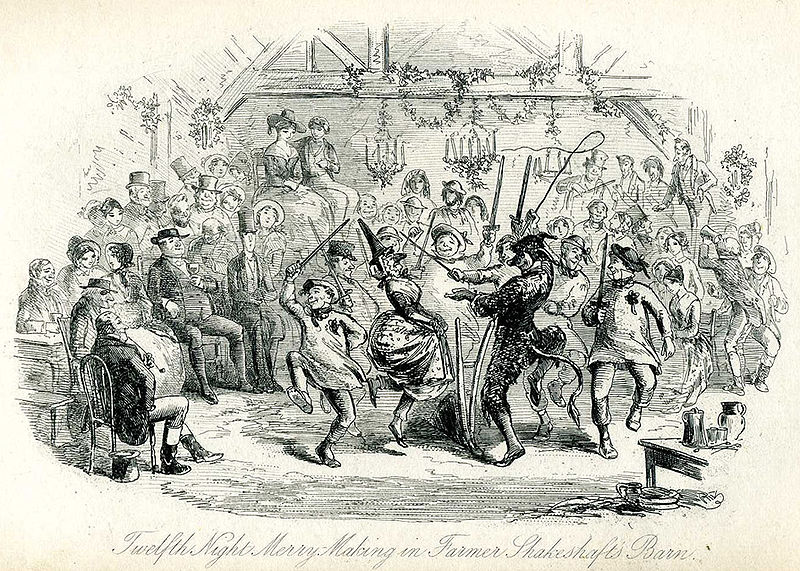
Today, in the 21st century US, the holiday of Twelfth Night has largely been forgotten, but one hundred and fifty years ago, we all would have had a rollicking good time.
Twelfth Night refers to the evening of the twelfth day of Christmas, and is observed as the holy day of Epiphany, commemorating the visit of the Magi to the Christ child. It occurs on either January 5th or 6th, depending on your region and religious denomination, and marks the end of the holiday season. Various traditions sprang up around this feast day, and it saw a surge in popularity in medieval and Tudor England. Customs then died out for a time before seeing a resurgence in the Late Regency and early Victorian period.
The center piece of any Twelfth Night celebration is the Twelfth Night cake. These were usually a rich fruit cake made from eggs, butter, fruit, nuts, and spices—a bit like Italian panettone. The king cake now made for Mardi Gras/Carnival in parts of the world is one variation. These cakes were often large and elaborately decorated with sugar frosting and delicate figures made of plaster of Paris or almond paste. Within each cake was baked a dried bean and a dried pea. The man who received the slice of cake with the dried bean became the Lord of Misrule for the evening, and the woman who found the dried pea was his Lady or Queen. In later years, gold tokens were used in place of the bean and pea because they were thought to be more gentile, as well as easier to locate within the baked confection.
The Lord of Misrule—who alternatively might be called the King of the Bean or the Abbot of Unreason—became lord of the evening. His job was to foster fun and mischief, and order his subjects to do all sorts of merry and ridiculous things. No matter how ludicrous the lord’s commands, they had be to be obeyed. He was often outfitted with a paper crown, a scepter, and even a mock throne.
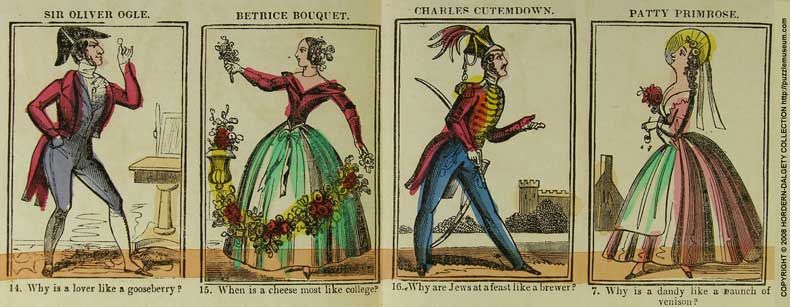
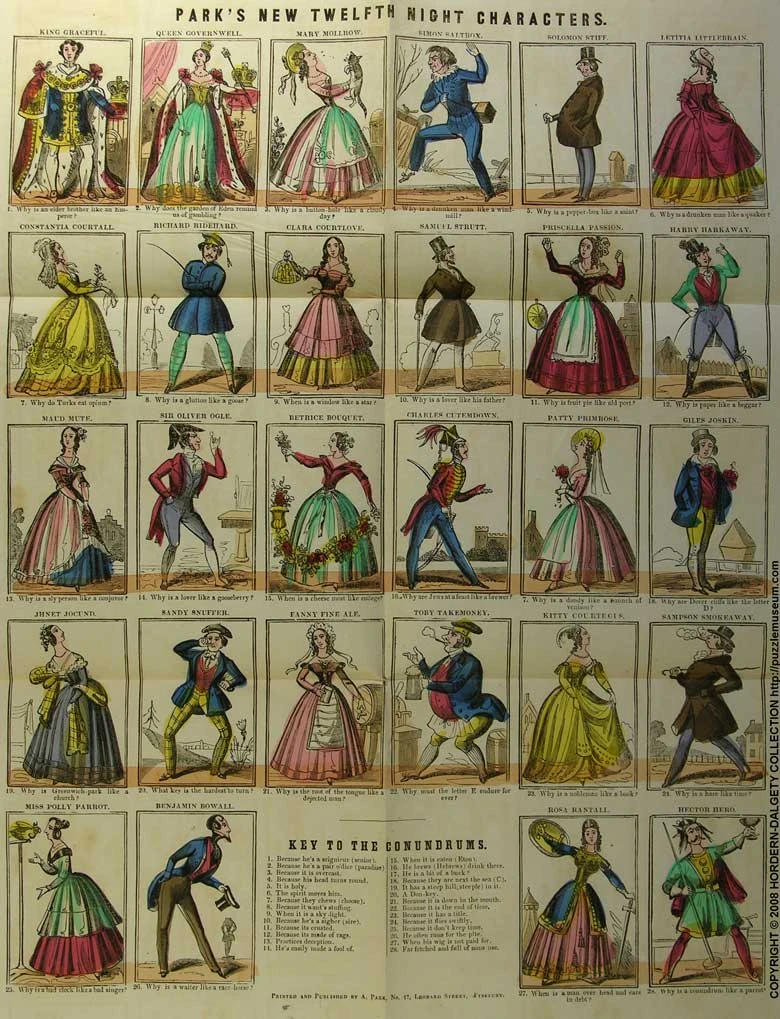
The rest of the party guests formed his mock court, taking on various roles in masquerade. Sometimes these roles were assigned by other items being baked into the cake—a twig for the fool, a rag for the tarty girl, or a clove for the villain. More often they were chosen from slips of paper drawn from a dish. During the late 1820s and onward it become increasingly popular to procure Twelfth Night character cards from stationers who made up large paper sheets that hosts could cut up into individual cards. These could then be sent to guests ahead of time, or drawn from a bowl as the slips of paper. Many of these caricatures were highly irreverent, and some were quite offensive and prejudiced to our more enlightened 21st century eyes. The goal of this mock court was to turn society on its head, making the fool the king and the servant the lord, and vice versa.
These parties were characterized by great feasting, drinking, dancing, and singing, as well as parlor games. Decorations were bright and colorful, and no party was complete without a few tricks. The song “Sing a Song of Sixpence” is supposedly inspired by one such notorious Twelfth Night prank. Amateur theatrics were also often staged. These parties were visited by wassailers moving from house to house as they sang and wished their neighbors good health. In exchange, they were given wassail, and a penny for each person along with a cup of cider and a piece of cake.
Holiday decorations were also traditionally removed on Twelfth Night, for it was thought to be bad luck to leave them up after. The Christmas greens were burned and the charred remains of the Yule log—which would have remained burning throughout the twelve days of Christmas to bring the house good fortune for the coming year—were gathered up after the party and kept in a safe place as protection, and so that they could kindle the next year’s Yule log with them.
I had great fun writing about a fictional Twelfth Night party for the opening scenes of A Stroke of Malice, Lady Darby Book 8, and I hope readers get more than a few laughs from their revelry. It’s inspired me to want to revive this fun holiday tradition, and perhaps it might inspire you, too.
Anna Lee Huber is the USA Today Bestselling and Award-Winning Author of:
The Lady Darby Mysteries (A Deceptive Composition, Book 12 – Coming Jun 18, 2024), Verity Kent Mysteries (A Certain Darkness, Book 6 – Aug 2022), Sisters of Fortune: A Novel of the Titanic (Coming Feb 20, 2024), Gothic Myth Series (Secrets in the Mist – Oct 2016), and Historical Anthology – The Deadly Hours (Sep 2020)
Exploring the Mysteries of the Past and the Secrets of the Heart: https://linktr.ee/AnnaLeeHuber

Jan 5, 2024
BAYBERRY CANDLES
Just the word “bayberry” conjures up the fragrance in my mind. Bayberry is one of my favorite scents. It’s a scent I associate with warmth and coziness—and of course, Christmas.
Back in the Hamilton’s day, when candles were mostly made from animal fat, having a scented candle was a luxury. So families like the Hamiltons would have had bayberry candles and used them only for special occasions, like Christmas. They would have been too expensive to use on a daily basis.
There are some interesting beliefs about bayberry candles, bringing good luck. Here’s an anonymous poem that’s been handed down through generations:
“These bayberry candles come from a friend. So on Christmas Eve & New Years Eve burn it down to the end.
For a bayberry candle burned to the socket will bring joy to the heart & gold to the pocket.”
Here’s lovely blog post, detailing some of the bayberry history and traditions, as well as how to make bayberry candles.
I’ve always wanted to try to make candles. I tried to make soap once and made a mess of it. Have you had success in making candles or soap?
Jan 4, 2024
ANOTHER KIND OF CHRISTMAS
When I ran across this account, even though it has nothing to do with Eliza Hamilton, I thought it would be interesting to share. It took place in 1804, the same year Hamilton died–and the year my book is set. This is a diary entry from a man who took his family from Connecticut to Upstate New York in the dead of winter. I thought it was very sweet that their journey stopped long enough to celebrate the holiday with their children–and that they prepared for it in advance of the trip.
Here is piece from John Gibbs journal:
“My wife and I realized that it was Christmas eve, and the children had anticipated its coming for many days. The night was dark in the extreme and I feared for the oxen, but arranged a pen for them in which they remained in safety during the night.”
“When the children were ready to go to bed they talked incessantly of the morrow and what it would bring. Roxy and I had prepared for just such an emergency. Before we left Meriden we bought several pieces of the candy in sticks and lump form. Roxy also made some doughnut men, and women, fashioning them in the image of beings. Too, the children’s aunt made a rag doll for the girl and a jack-on-the-stick for the boy. These we placed in a box aside from the rest of our goods and they made the journey with us.”
“When the children went to bed they hung up their stockings on the sticks that came down from the roof of the shanty. They were confident that Santa Claus would find them and their confidence was rewarded yesterday morning when they woke and found the gift tucked into the little stockings. Their joy at the gifts was beyond their power of expression.”
If you are interested in this family and their journey, you can read more here:
Northern New York Pioneer Christmas
If you’d like to make a ragdoll, check out this video: No Sew Pioneer Rag Doll

Jan 3, 2024
CHRISTMAS IN 1942
(Guest post by Joyce Tremel – aka Joyce St. Anthony)
(Note from Mollie: You will note that this takes place during another historical time period, I think it adds interest to see the way Christmas celebrations have changed throughout the years. Enjoy!)
My Homefront News mysteries take place in 1942. The US had entered the war right after Pearl Harbor was bombed in December 1941, so at Christmas time, the country had been at war for a year. Although troops wouldn’t engage in combat in Europe until 1944, there was hard fighting in the Pacific. Many families had already suffered the tragedy of losing sons, husbands, and friends. In the second book of my series, Death on a Deadline, my protagonist Irene loses a neighbor friend in the Battle of Midway.
Christmas 1942 was the first where blackouts were in effect in many cities. There were no outdoor lights, and lights indoors weren’t seen by neighbors because curtains and blinds were drawn after dark. Christmas trees were in short supply in many areas, making artificial trees more popular. Even toys were hard to find. With metal and rubber being used for the war effort, toy designers resorted to wood and cardboard. Gifts were often homemade—knitted or crocheted items were popular. Instead of gifts, the government suggested that people purchase war bonds. There was rationing of tires, automobiles, and gasoline, so people couldn’t travel far from home. Train travel was discouraged so troops could use the trains. Some foods, like sugar, had been rationed in May 1942, and coffee rationing began in November. Although turkeys weren’t rationed, many opted to forego the bird so more could be sent to the troops overseas.
Despite all this, people were determined to celebrate. They made do with what they had. Housewives saved their sugar rations so they could make holiday treats. One popular recipe during the war was the Wartime Chocolate Cake (recipe below). Notice there are no eggs in the recipe. Christmas songs were more popular than ever. Irving Berlin’s “White Christmas” sung by Bing Crosby topped the charts for weeks in 1942.
Just like in other eras, most people were resilient and willing to sacrifice for the common good. I often wonder if people would be willing to do so in today’s world. I hope we’re never put to the test.
WARTIME CHOCOLATE CAKE
Ingredients:
1-1/2 cups flour
1 cup sugar
3 tablespoons unsweetened cocoa
1 teaspoon baking soda
1/2 teaspoon salt
1 teaspoon vanilla
1 teaspoon white vinegar
5 tablespoons vegetable oil
1 cup cold water
Directions:
In large mixing bowl, mix flour, sugar, cocoa, soda, and salt.
Make three wells in the flour mixture. In one put vanilla; in another the vinegar, and in the third the oil. Pour the cold water over the mixture and stir until moistened.
Pour into 8 x 8-inch pan.
Bake at 350°F. oven for 25 to 30 minutes, or until it springs back when touched lightly.
Jan 2, 2024
DECORATING FOR CHRISTMAS
Because Eliza Hamilton grew up in a Dutch household, she may have had a Christmas tree, as the Germans and Dutch had been using them for many years. But there’s no record about how the Hamiltons celebrated Christmas, so we don’t know for sure.
The first documented Christmas tree in the U.S. was at Fort Dearborn, on the site of the present-day city of Chicago, Illinois, in 1804, the year of Hamilton’s death. But like all good traditions there are other sources claiming other things, like one says the first records of Christmas trees being cut for display comes from the 1820s in Pennsylvania’s German community, although trees may have been a tradition there even earlier. As early as 1747, Moravian Germans in Pennsylvania had a community tree in the form of a wooden pyramid decorated with candles.
I found this blog post on how the Washingtons celebrated Christmas and you can suppose that Christmas for the Hamiltons was about the same, a subdued celebration, if any, and mostly focusing on the religious aspect.
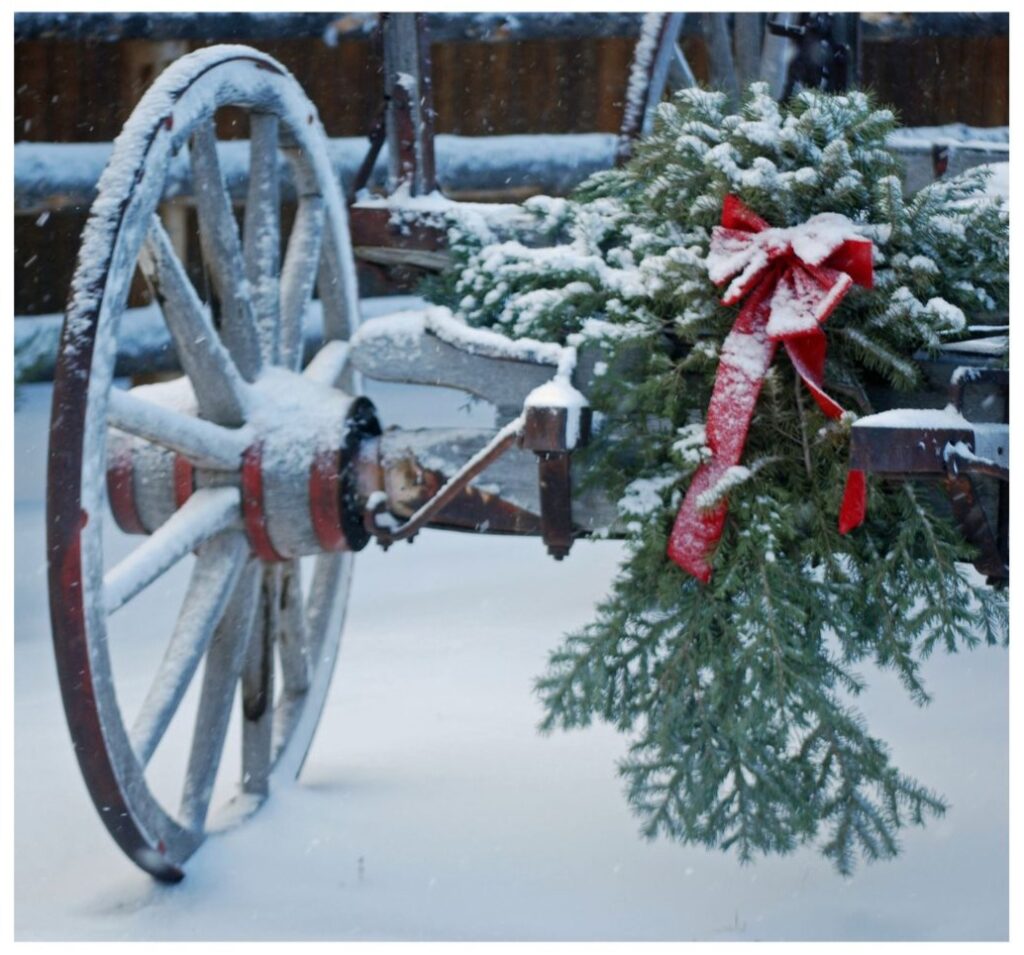
But one thing that had been done for centuries before is using greenery to decorate indoors during Christmas. Garlands made of pine, holly, ivy, and mistletoe were popular and easy enough to make. I’ve made a few wreaths with rosemary and they turned out very well. I gave them as gifts one year and people have kept them, claiming they still smell lovely.
Here’s a great blog post on what kind of greenery to collect to make your own wreaths or garlands.
Do you use fresh greenery for your decorating?
Jan 1, 2024
FLIPPING EGGS WITH MARTHA WASHINGTON
(Guest post by Mally Becker)
I stood in the center of the kitchen, balancing a heavy book in one hand and staring at everything I’d hauled on to the countertop—lemons, apples, plenty of eggs, cream, and more.
My husband cleared his throat. “It’s late for breakfast, isn’t it?”
“Not making breakfast.” I shook my head.
“Then what’s all this?”
“I’m cooking with Martha Washington.” I’m afraid I sounded grim.
“You’ve gone off the deep end.”
“Maybe,” I said through gritted teeth. It had seemed like a great idea at first. Now, I wasn’t so sure, since I’m not the greatest cook. “I was searching for recipes from the 1700s to give readers a sense of how food would have looked, smelled, and tasted back then.”
I resisted the urge to lecture about the way writers use the five senses in their work to make a time, place, and people feel real to readers. I’d talked to reenactors, had heart-to-heart conversations with museum curators about how annoying it would (or wouldn’t have) felt to wear stays under a dress every day, and, yes, researched recipes for my Revolutionary War mysteries.
“So what’s with Martha Washington?” He picked up one of the apples on the counter. “You want these sliced?”
I nodded and answered his first question.
“I found this.” I showed him the paperback cover of Martha Washington’s Booke of Cookery and lay the book open on the counter next to a few of the green Granny Smith apples. “I think it goes back a lot further than the 1700s. It has recipes for things like ‘green Apricock chips’ and ‘plague water.’”
“You just like the sound of those words, don’t you?”
It’s nice to be understood. I smiled, then added butter to the pan on the stove and turned up the heat.
“What’s this going to be, then?” he asked.
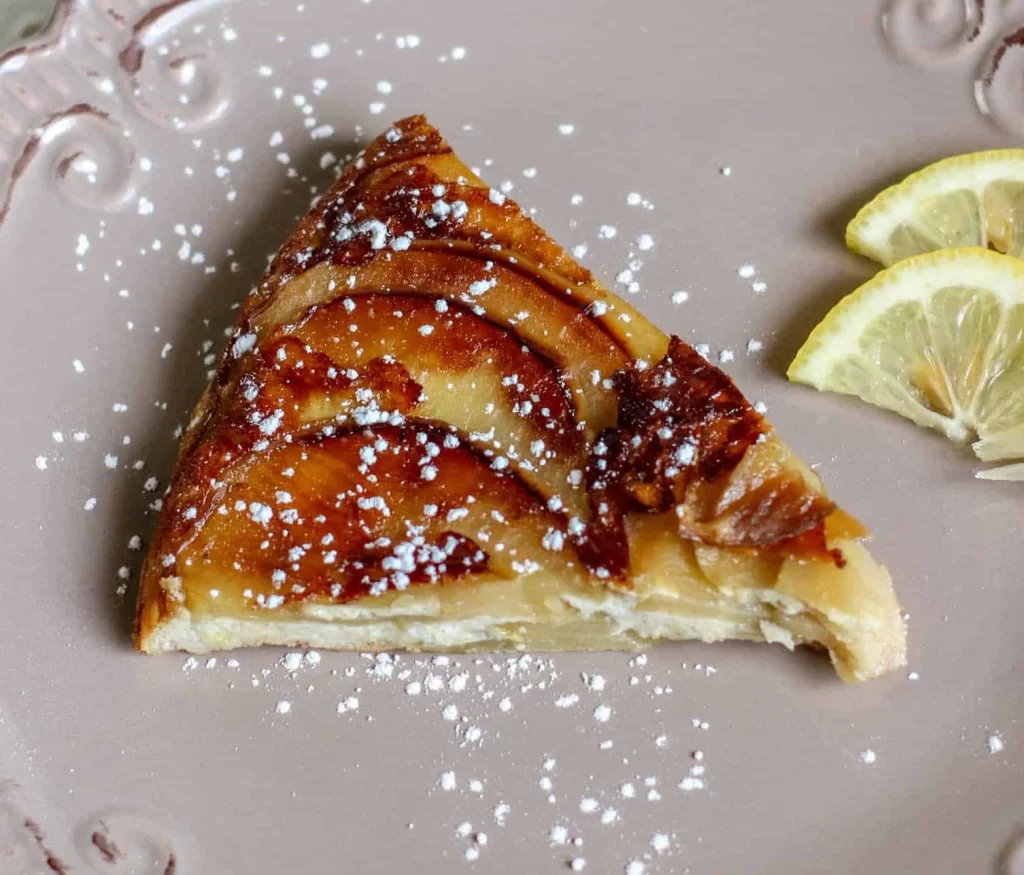
“My version of Martha Washington’s apple tansie. It’s a slightly sweet egg pancake. Maybe halfway between an omelet and a crustless quiche.” I scooped up the sliced apples and added them to the pan.
“Your version?” He only sounded slightly nervous. Did I mention I’m not a reliably good cook?
“My version cuts the number of eggs from twelve to six. I also used less cream than the original recipe and substituted vanilla extract for rosewater.” I grinned. “And don’t worry. You don’t have to eat it.”
By that time, the kitchen was redolent with the scent of butter, cooking apples and cinnamon. My dear husband ate his share of the tansie and enjoyed it. I hope you do, too, especially if you savor it while reading an especially good book like The Lace Widow.
Apple Tansie
(serves two)
3 whole eggs
3 egg yolks
3-4 tablespoons heavy cream
1 teaspoon vanilla
1 ½ teaspoons sugar
A pinch of cinnamon
A pinch of nutmeg
A pinch of salt
Powdered sugar
Sauté the sliced apples in butter in a flat pan (or omelet pan). Sprinkle a pinch of sugar and cinnamon over the apples as they cook. Remove from the pan when softened to your liking.
Mix the eggs, heavy cream, vanilla, sugar, nutmeg, salt and shredded apples.
Add fresh butter to the same flat pan you used to sauté the apple and pour the egg mix into it, cooking gently. When firm, flip the tansie and cook the second side.
“Serve it up hot,” the cookbook directs, and add the sautéed apples and powdered sugar, “on ye side you fryde last.”
—-
Two-time Agatha Award nominee Mally Becker is the author of the Revolutionary War mysteries, The Turncoat’s Widow and The Counterfeit Wife. The next installment in her series, The Paris Mistress, will be published on January 2, 2024. You can reach Mally at www.mallybecker.com.
Dec 31, 2023
SPICY LITTLE COOKIE
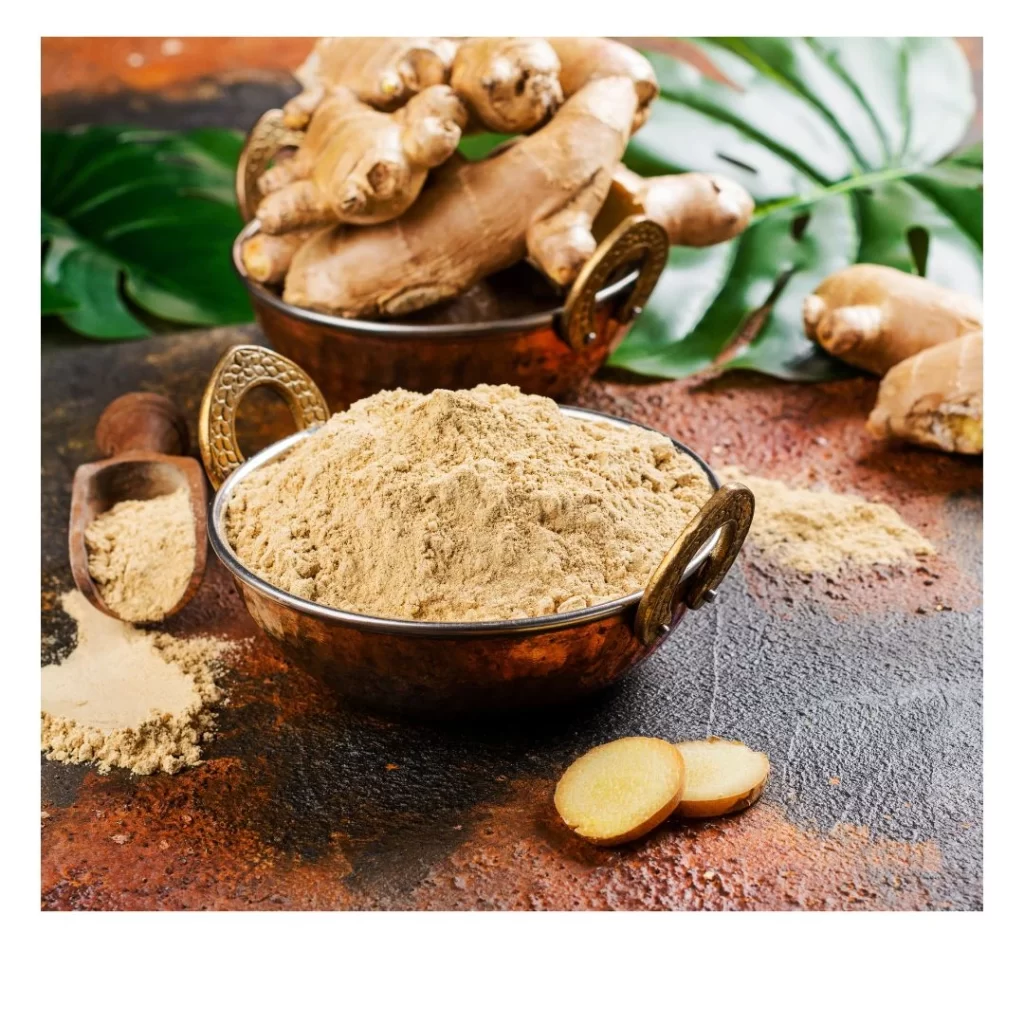
Because Eliza Hamilton came from a Dutch family, we can assume that many of her traditions had a Dutch flair. She probably had seen, if not had, her own Christmas tree, as it was very popular among the Dutch. Also, she probably knew about, if not tasted one of the treats moderns associate with Christmas is gingerbread, which has a very interesting history.
Huxtins.com reports that the first mention of lebkuchen (German for gingerbread) dates back to 1395. In 1643 the Nuremberg master gingerbread bakers created their own guild, which meant that only those with their own oven could sell the gingerbread. The recipes are still secret, but they do contain allspice, aniseed, cardamom, cinnamon, cloves, ginger, mace, nuts and peel.
In Gingerbread: Timeless Recipes for Cakes, Cookies, Desserts, Ice Cream and Candy, author Jennifer Lindner McGlinn writes that the gingerbread guilds were formed in Nuremberg and Reims revealing the place and honor these bakers held in their communities. The valuable spice trade moved through the crossroad city of Nuremberg, allowing its bakers to buy the spices and herbs it needed to mix with the local forest honey. (A distinction in German gingerbread is the honey—British gingerbread uses more sugar.)
In the 17th century, governments established guilds where the craft could be taught and preserved. Even carpenters, sculptors, painters and goldsmiths participated in the gingerbread guilds by building and painting molds. To become a member of the guild, a baker had to pass the guild regulations to produce a masterpiece giving evidence of his skills. Honey farmers were supported, too, by this guild economy,
“Today, only lebkuchen, produced in the city proper, can boast the name Nürnberger Lebkuchen,” McGlinn states in her book.
Interestingly, at one point in Germany’s gingerbread history, it was illegal for home bakers to make their own gingerbread—except during certain holidays, like Christmas.
It’s hard to say if Eliza Hamilton made gingerbread during the holiday, but why not imagine her enjoying a spicy little cookie as she sipped her tea?
Check out this early recipe: Cookies from 1803 |Ginger Cakes| Low Sugar Gingerbread Cookies
Dec 30, 2023
COLONIAL CHRISTMAS FOOD TRADITIONS FROM GREAT BRITAIN (Guest post by Christine Trent)
Now, bring us some figgy pudding,
Now, bring us some figgy pudding,
Now, bring us some figgy pudding, and bring it out here!
Good tidings we bring to you and your kin.
We wish you a Merry Christmas and a Happy New Year.
From We Wish You a Merry Christmas, 16th century Christmas carol
As most readers of American colonial history know, many 18th century Christmas traditions came from Great Britain and we still enjoy quite few of them today. Because I always like to mention specific foods my characters eat when writing historical fiction, I’d like to explore just a few of the food traditions brought to Colonial America by Great Britain.
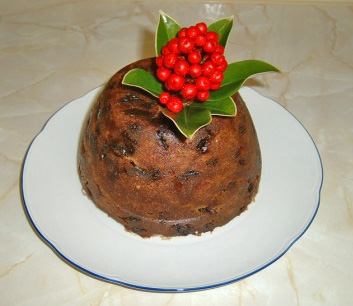
Christmas Pudding
Also known as Figgy Pudding or Plum Pudding, Christmas Pudding has its origins in the 14th century as a dish called “frumenty,” a sort of sticky, thick porridge made of boiled figs, ground almonds, honey, water, and wine. It would later incorporate beef, mutton, and grains; then later still would evolve into a steamed dish containing currants, raisins, and spices to become Plum Pudding.
Why “plum” pudding? Plums were what early 19th century Britons called dried fruits in general, and since the dish contained figs, raisins, and currants, the name stuck.
Over the years, the dish evolved into one containing figs—of course—as well as butter, sugar, eggs, suet, milk, rum or brandy, apple, candied lemon and orange peel, nuts, cinnamon, cloves, and ginger. Sounds rich, doesn’t it?
It wasn’t until 1845 that the dish came to be known as “Christmas Pudding,” in Eliza Acton’s bestselling cookbook, Modern Cookery for Private Families. Today in the U.S., it tends to be referred to as Figgy Pudding, whereas in the U.K. it is still known as Plum Pudding or Christmas Pudding or sometimes even just “Pud.” Christmas pudding frequently incorporates symbolism reflective of Christ such as topping it with holly (representing the crown of thorns) and setting the pudding on fire (representing the passion of Christ). Placing a silver sixpence in the pudding is another old custom said to bring luck to the person that finds it.
Twelfth Night Cake
In the 18th century, Christmas in Britain lasted from December 6th (St. Nicholas Day)
through January 6th (Twelfth Night), with gifts exchanged on both nights.
Still not as long as our Christmas in the U.S., which appears to start around Halloween, if not earlier!
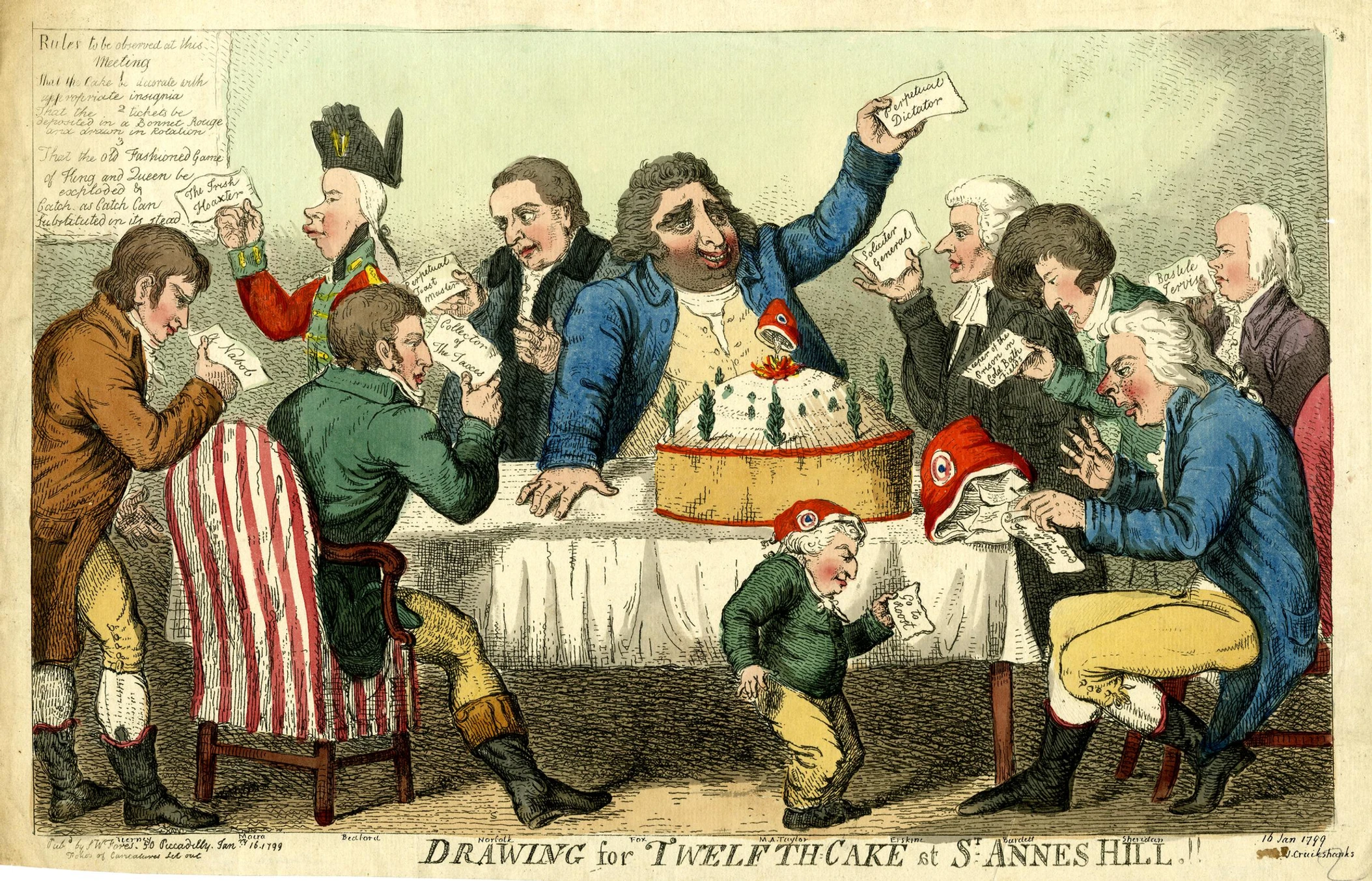
Twelfth night was the culmination of Christmas and rich and poor would have had family get togethers, make music and mark the end of the Christmas season. Central to the celebration was the Twelfth Night Cake, also called the King’s Cake. It would have contained a bean and a pea, respectively designating a king and queen of the night’s raucous festivities for those who found them in their slices of cake. Even servants could play “royalty” if they found the dried legumes.
Twelfth Night Cake, sometimes just called Twelfth Cake, was an extravagantly decorated rich fruit cake, usually topped with two crowns.
In famed diarist James Boswell’s 1762 account of Christmas, he notes the following about Twelfth Night cake:
‘This was twelfth-day, on which a great deal of jollity goes on in England, at the eating of the Twelfth-cake all sugared over…I took a whim that between St Paul’s and the Exchange and back again, taking the different sides of the street, I would eat a penny twelfth-cake at every shop where I could get it. This I performed most faithfully…People used to stop and stare into the windows of pastry cooks at the gorgeous Twelfth Night Cakes on sale.’
Mince Pie
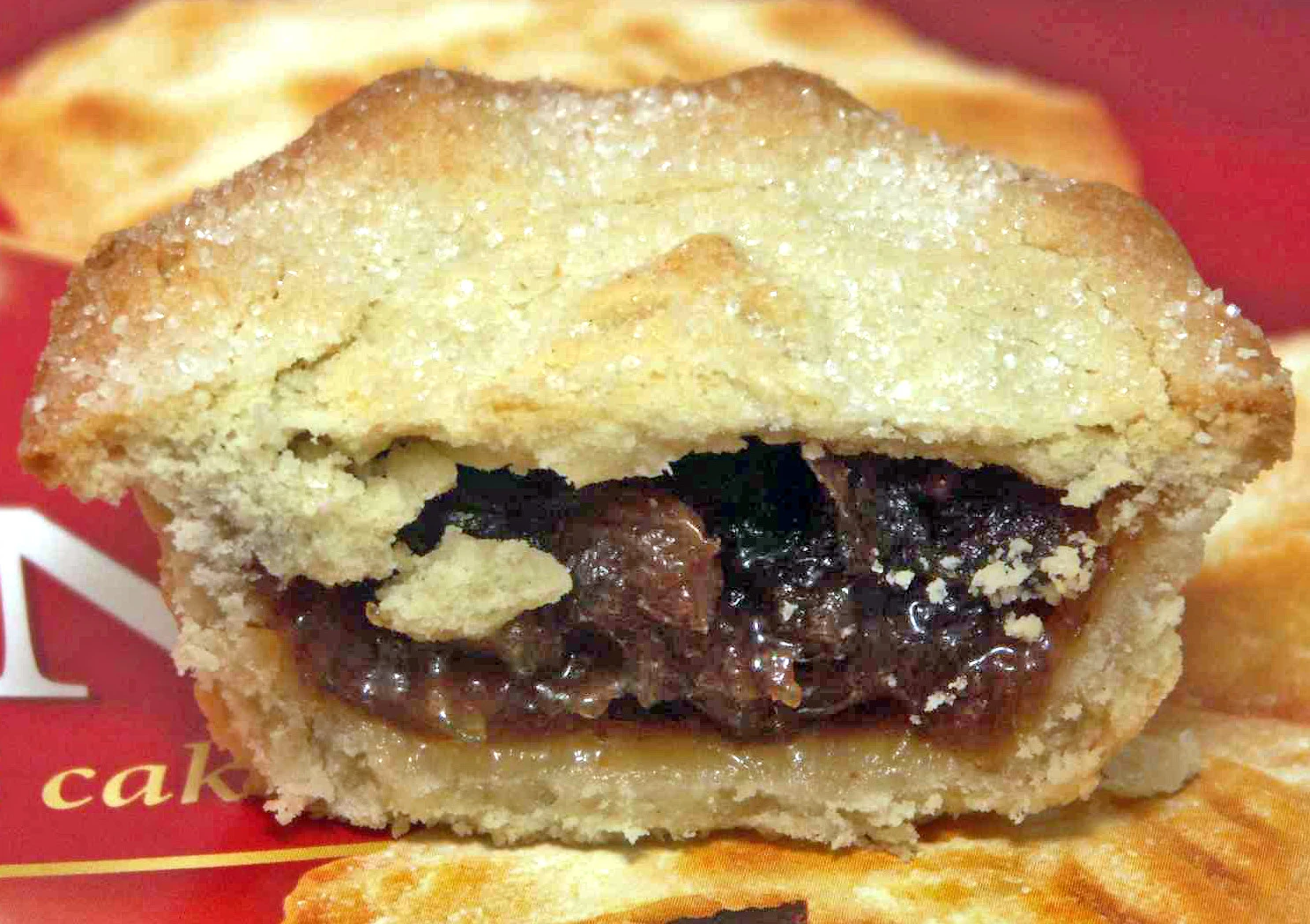
Dating back to the Middle Ages, Mince Pies were stuffed with minced meat such as lamb or veal, chopped fruit like raisins, prunes, and figs, and a preserving liquid, which served as a way to preserve meat without salting or curing it. It was quite common to mix savory meat with sweet fruits in the era.
A well-baked meat pie, with liquid fat poured into any steam holes left open and left to solidify, appeared to preserve the contents within for up to a year, with the crust apparently keeping out air and spoilage. It seems difficult to fathom today, but it was a common practice then.
By the Tudor era, the pies were rectangular, shaped like a manger, and frequently incorporated a pastry baby Jesus on top.
After the English Reformation, the pie adopted a round shape.
By the 18th century, tongue or even tripe had become the minced meat of choice, with minced beef becoming popular in the 19th century.
In the late Victorian period, Mince Pies dropped the meat altogether and were comprised of all fruit fillings (except for the suet, of course). This seems to be due to the rise of sugar plantations, making sugar easier and cheaper to obtain. Mrs. Beeton’s Book of Household Management—a reference I use regularly in writing my Victorian mysteries—gives instructions for not only a meat version of Mince Pie but also a sweet version.
Today’s Mince Pie is a crumbly pastry filled with fruit, often soaked in brandy and flavored with citrus and spices. A dollop of brandy butter or cream finishes off this rich dessert.
Old customs surrounding the dish include stirring the pie mixture clockwise only for good luck and always making a wish when eating the first Mince Pie of the season.
And if you were to get heartburn as a result of all of this rich food, no worries! There was an 18th century cure for that! Hannah Glasse’s 1774 cookery book, The Art of Cookery Made Plain and Easy, includes this “powder for the heart-burn”:
Take white chalk six ounces; eyes and claws of crabs, of each an ounce; oil of nutmeg six drops; make them into a fine powder. About a dram of this in a glass of water is an infallible cure for the heart-burn.
Not enough rich food for you? How about a Yorkshire Christmas Pie, which used all of the following: a turkey, a goose, a partridge, a pigeon, woodcocks, plus any other birds the cook could find, plus four pounds of butter, stuffed into a thick crust made from ten pounds of flour?
Life could be difficult and unforgiving on both sides of the Atlantic in the 18th century, but celebrations around rich food were just as popular then as they are today.
Christine Trent is the author of the Lady of Ashes Victorian mystery series and several other historical novels, as well as the Heart of St. Mary’s County series, set in Maryland. She is currently finishing up a Revolutionary War trilogy, Forged in Liberty, slated for publication in 2025. Learn more at www.ChristineTrent.com.
Dec 29, 2023
ALEXANDER HAMILTON’S FAVORITE HERRING SALAD
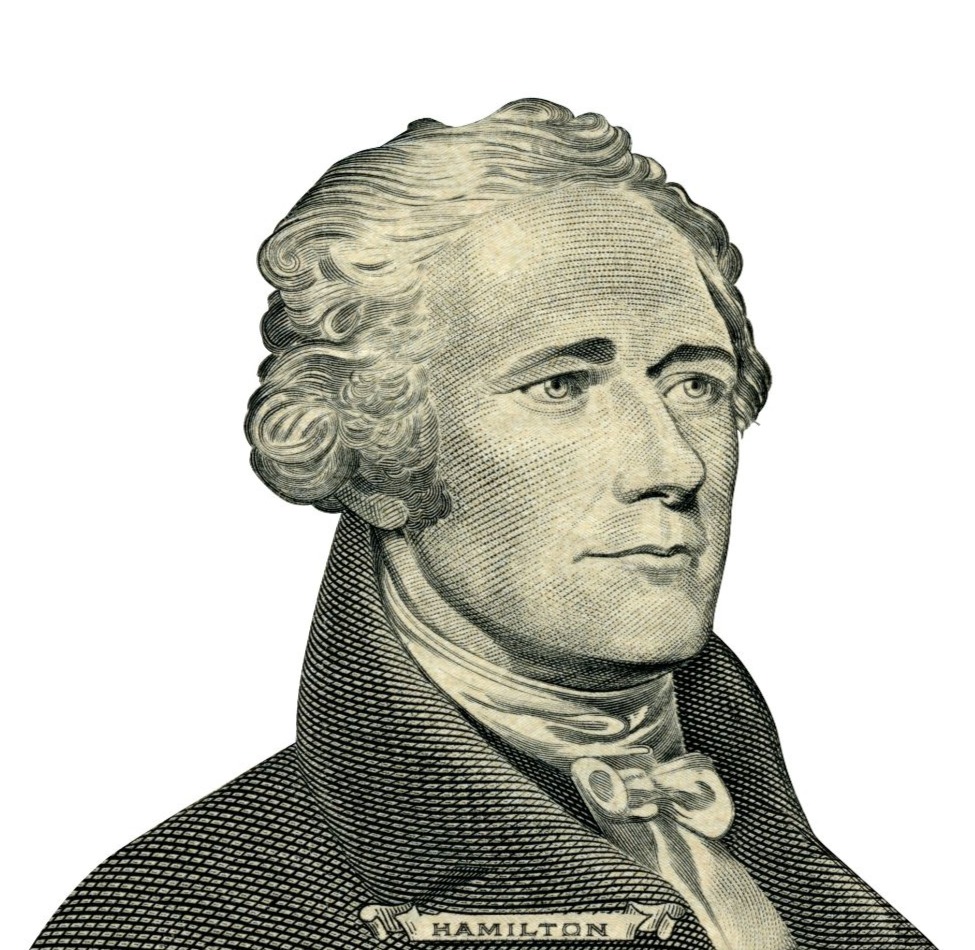
According to Historical Christmas Cookery, by Robert W. Peloton, this dish was a favorite of Eliza’s famous husband, Alexander Hamilton.
Herring Salad
4 lettuce leaves
2 large, raw salted herrings
8 potatoes boiled and diced
2 sour apples, diced
2 small beets, diced
6 eggs, hard boiled
6 small pickled onions
6 small gherkins
2 tablespoons olive oil
3 tablespoons cider vinegar
Lay lettuce leaves at the bottom of a bowl and skin and bone the herring.
Cut into small pieces and sprinkle evenly on the lettuce leaves.
Now place the sour apples, beets, and potatoes.
Garnish with slices of hard-boiled eggs, pickled onions, and gherkins.
Dress with a mixture of cider vinegar and olive oil.
What do you think? Does it sound good? I couldn’t get past the raw herring!
Dec 28, 2023
DRINK!
Making merry “sometimes” seemed to include alcohol. I don’t know if Eliza Hamilton drank much, but I assume she would have at least had wine with dinner on occasion. We hear a great deal about wassail at Christmas–and maybe she would’ve tried it, given that a lot of Brits were around and it is a very English drink.
But Eliza’s family was Dutch and they had their own traditions. So to cover my bases here, I’m including a wassail recipe with a link to a YouTube video. I’m also including a link to an Advocaat –Dutch Eggnog, which she may have been more likely to imbibe, especially before she married. It looks delicious!
Wassail Recipe from The Williamsburg Cookbook
As traditional and familiar as most any English Christmas carol, the song is among the season’s more anachronistic, an evocation of a holiday custom that pretty much puzzles modern celebrants: wassailing.
(20 servings)
Ingredients:
1 cup sugar
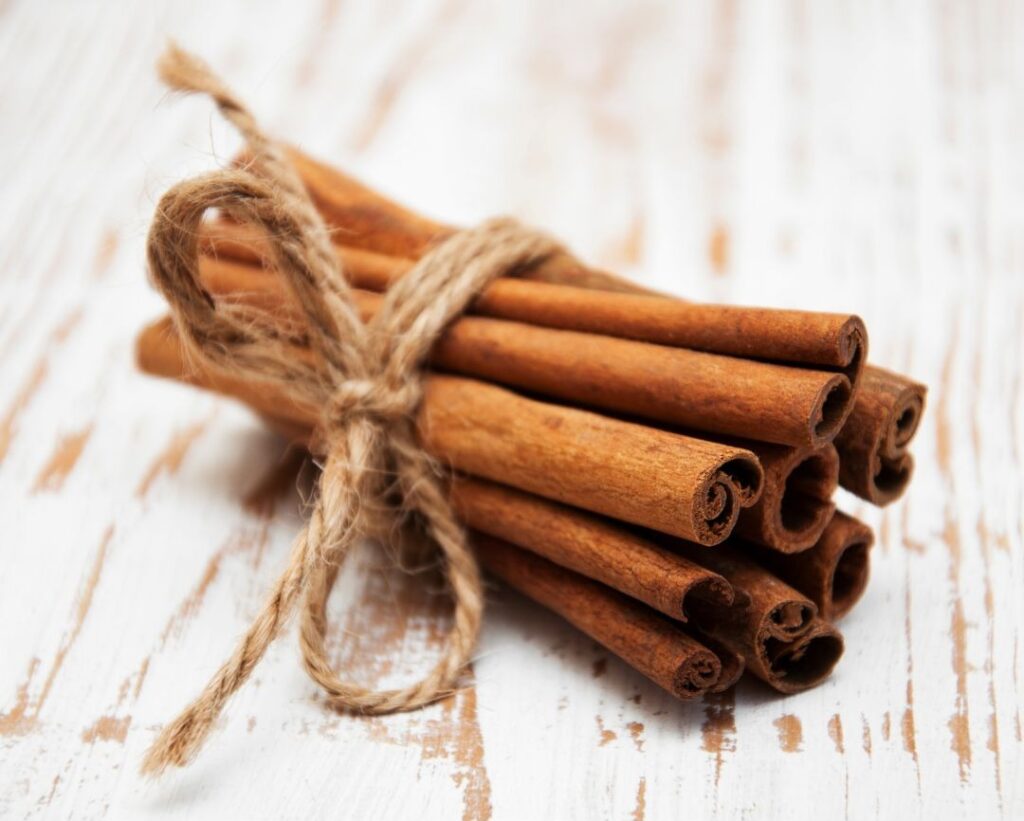
4 cinnamon sticks
3 lemon slices
2 cups pineapple juice
2 cups orange juice
6 cups dry red wine
½ cup lemon juice
1 cup dry sherry
2 lemons, sliced
Wassailing is an ancient English custom, part of the feasts and revelry of New Year’s Eve and New Year’s Day, which have been revived in Colonial Williamsburg. The master of the English household drank to the health of those present with a bowl of spiced ale, and each in turn after him passed the bowl along and repeated the Saxon phrase “Wass hael,” which means “be whole” or “be well.”
Directions:
Boil the sugar, cinnamon sticks, and 3 lemon slices in ½ cup of water for 5 minutes and strain. Discard the cinnamon sticks and lemon slices.
Heat but do not boil the remaining ingredients. Combine with the syrup, garnish with the lemon slices, and serve hot.

Dec 27, 2023
WHEN CHRISTMAS WAS BANNED, AND MINCE PIE ALONG WITH IT… (Guest post by Susanna Calkins)
I can’t say I’ve ever had mince pie, but I never would have guessed it has such a secretive, mysterious history. Is the mince pie capable of being so subversive that it must be banned?
Well, seventeenth-century Puritans thought so. For Cromwell–(the original Grinch? You tell me!)—Christmas represented a time of excessive drinking, gambling, and all around unwholesome merrymaking—all activities that made the Puritans a bit queasy, and decidedly ungodly.
So, in 1644, Parliament banned Christmas in England. They renamed the day Christ-Tide (you know, to remove the “papist” overtones of Mass). The hanging of holly and ivy was strictly prohibited. Merchants were advised to keep their stores and stalls open (to avoid sloth and idleness). And if soldiers walking by smelled a goose for supper—well, your goose was cooked.
And the poor mince pie? Banned in any public place. Ever since the Crusades, the mince pie had symbolized and honored the birth of Christ. When the Crusaders returned from the Holy Lands, three spices were added to a lamb pie– cinnamon, cloves and nutmeg–each spice representing the three gifts bestowed upon the Christ child by the Magi. Pies were very small, shaped in the form of a cradle, and eaten throughout the twelve days of Christmas. So to the Puritans, these small pies represented everything that was wrong with Catholicism.
Christmas in the American colonies fared no better. The Massachusetts Bay Company General Court ordered that “whosoever shall be found observing any such day as Christmas or the like, either by forbearing of labor, feasting, or any other way, upon any such account as aforesaid, every such person so offending shall pay for every such offence five shilling as a fine to the county.”
Yikes! Five shillings for every offense—that’s got to add up. However, despite these prohibitions, people continued to make mince pies, calling them “shred” or “secret” pies. (Although calling it a secret pie might have defeated the purpose, but so be it).
And for Christmas lovers everywhere, don’t worry. The story ends well.
When Charles II was restored to the throne in 1660, the spectacle and merriment of Christmas returned, although it took a little longer in the colonies. And holding a place of honor at the Christmas meal, was the humble mince pie.
So, I’m curious–do people still eat mince pie this side of the pond? Or the other side, for that matter? And more interestingly, what other secrets and lost histories lurk within our everyday traditions and customs?
Dec 26, 2023
TWELVE DAYS OF AN ELIZA HAMILTON CHRISTMAS!
Welcome to 12 Days of an Eliza Hamilton Christmas!
Hope you all had a lovely Christmas. Haven’t you always wondered how the holidays were celebrated a few hundred years ago? If so, I’ve got a treat for you.
The tradition of 12 days of Christmas, or Christmastide refers to the time between Christmas Day (December 25) and Epiphany (January 6), with Day 1 on December 25 and Day 12 on January 5. For our purposes we are starting the day after Christmas, which some claim to be the more traditional. Who knows? We’re here to have fun!
Check in here every day, and find recipes, crafts, and wonderful blog posts from some of your favorite historical mystery authors: Christine Trent, Susanna Calkins, Mally Becker, Joyce Tremel, and Anna Lee Huber. In between will be a few posts from me. On some days, there will even be prizes. Check back in tomorrow, leave comments, and at the end of the 12 Days, I will be giving a $25 Amazon gift certificate to the person who comments the most! Cheers!
Dec 6, 2023
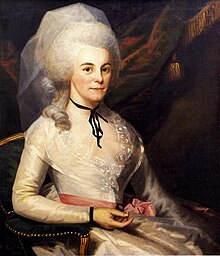
WHY ELIZA HAMILTON?
When Disney released “Hamilton: the Musical,” I watched the first day–and then I watched it again and again. As a writer, I was in awe (still am) of the way Lynn Manuel Miranda spun that story. But as a woman, the character that grabbed me was Eliza. I wanted to know more about her. Whether it’s true or not that she destroyed any papers containing her story, there certainly is not a lot of material about her. At this point I can say, I’ve read most of it.
Some writers of historical women are accused of giving their female characters a modern outlook. Eliza Hamilton, however, gave me the gift of being just that. From everything I’ve
read about her, she was definitely a woman grounded in her time, but also a woman who was exposed to much more than most women. She soaked it all in, from the time she was a child to her death. It invariably affected her. When I read about her visiting people days after her husband’s death, campaigning against Aaron Burr, her character took root for me. So while she’s gifted me with a modern sense of being slightly rebellious, her reasoning all goes back to the love of her husband and her family. She does not rebel for her own sake.
I know it’s risky for a writer to take on such a beloved American character and take her in directions that are not quite historically accurate. But once the story took root in my mind, I had to write it.
It’s been an honor to get to know her. History gives us hindsight, as we know that Eliza Hamilton did go on to make a difference, most especially in helping to start the Graham Windham Orphanage, which still functions today.
I think many modern women can relate to Eliza Hamilton in so many ways. I can’t tell you how many fellow Hamilton the musical fans have said they wanted more of Eliza’s story. I hope I have done her justice, though I know there’s so much more to her.